Your First Winter in the Swiss Alps: A Complete Guide

A first winter in the Swiss Alps is not quite like a first winter anywhere else. The mountains are high, the transport works, and a great deal of the experience happens off the ski slopes entirely — on a sledge run, in a thermal bath, on a train climbing through snow-covered forest, or at a Christmas market in a valley town.
That breadth is the thing most first-time visitors underestimate. You do not need to ski to have a full winter holiday here, and many of the best days involve no lift pass at all.
This guide covers when to come, where to base yourself, what there is to do, how to move around, and what to pack — with the emphasis on the decisions that actually shape a first trip.
When Winter Happens in the Swiss Alps
The Alpine winter season runs broadly from mid-December to early April, but conditions vary considerably with altitude.
- December — Christmas markets, early-season snow, short days and a festive atmosphere in the valleys.
- January — the coldest and quietest month, with reliable snow cover and the lowest crowds after New Year.
- February — the most consistent conditions overall, and also the busiest, coinciding with school holidays.
- March — longer days, softer light and warm afternoons; excellent for winter hiking and sun terraces.
- Early April — high-altitude resorts still operating while the valleys turn to spring.
High-altitude resorts such as Zermatt and Saas-Fee hold their season longest. Lower villages can be unreliable in December and early April, which is worth knowing before booking.
One practical point that surprises many visitors: midwinter days are short. In late December the sun drops behind the mountains in some valleys by mid-afternoon, and a north-facing village can lose direct sunlight for weeks. Plan outdoor activity for the middle of the day.
Choosing Your First Base
Where you stay matters more than which activities you book. Switzerland's mountain regions each have a distinct character, and the right choice depends on whether you are here mainly to ski, mainly to look, or a mixture of both.
Zermatt
Car-free, high, and dominated by the Matterhorn, Zermatt is the postcard version of the Swiss winter and largely lives up to it.
The altitude gives it one of the most reliable seasons in the country, and the Gornergrat railway carries non-skiers to a viewing platform above 3,000 metres. It is expensive, and it is reached by a change of train at Täsch, but for a first visit the impression is hard to beat.
Grindelwald and the Jungfrau Region
Grindelwald sits directly beneath the north face of the Eiger, with Wengen and Mürren on the surrounding terraces and Kleine Scheidegg between them.
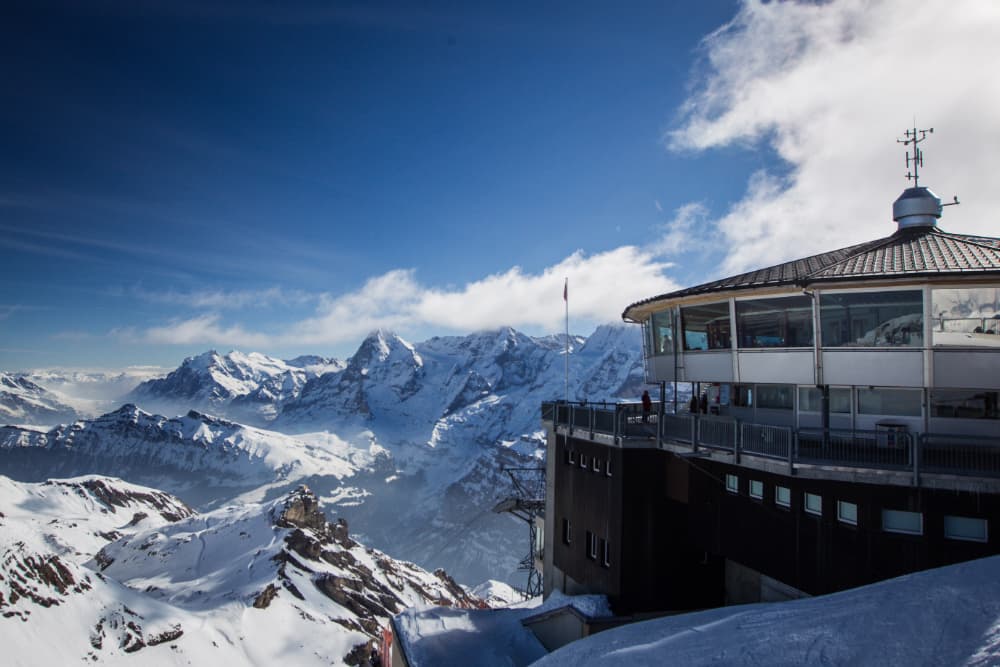
It is the strongest choice for a mixed group. Skiers have a large linked area, non-skiers have the Jungfraujoch railway, winter walking trails and sledge runs, and the whole region is well connected by mountain railway rather than by road.
St. Moritz and the Engadin
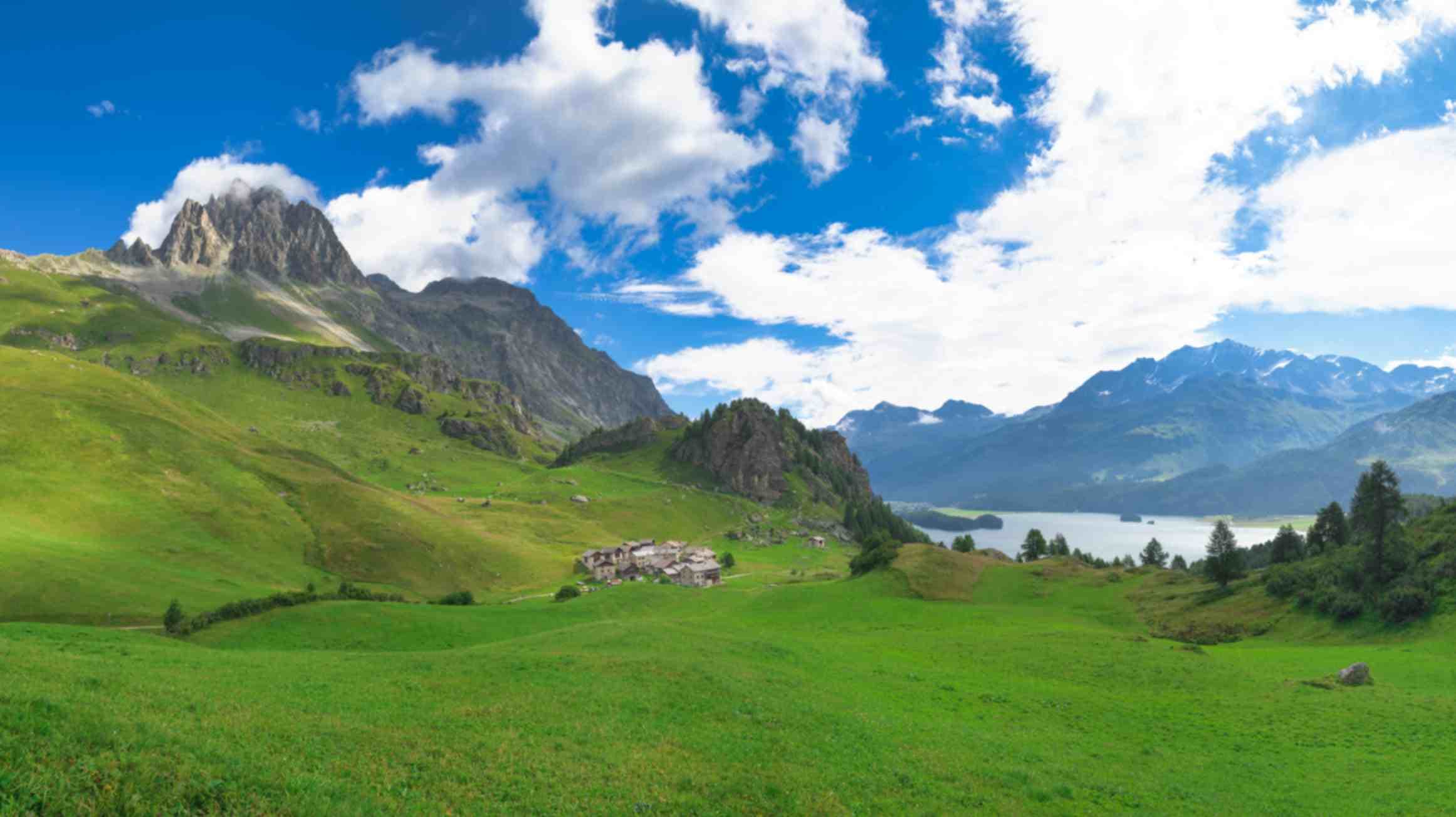
The Engadin valley sits at around 1,800 metres and is unusually sunny in winter. The lakes freeze hard enough to walk on, and the light in February is exceptional.
St. Moritz itself is the best-known name, but Pontresina and the smaller villages along the valley are quieter and considerably less expensive. The Bernina Express runs from here, which makes it easy to combine a winter stay with one of the great scenic rail journeys.
Davos and Klosters
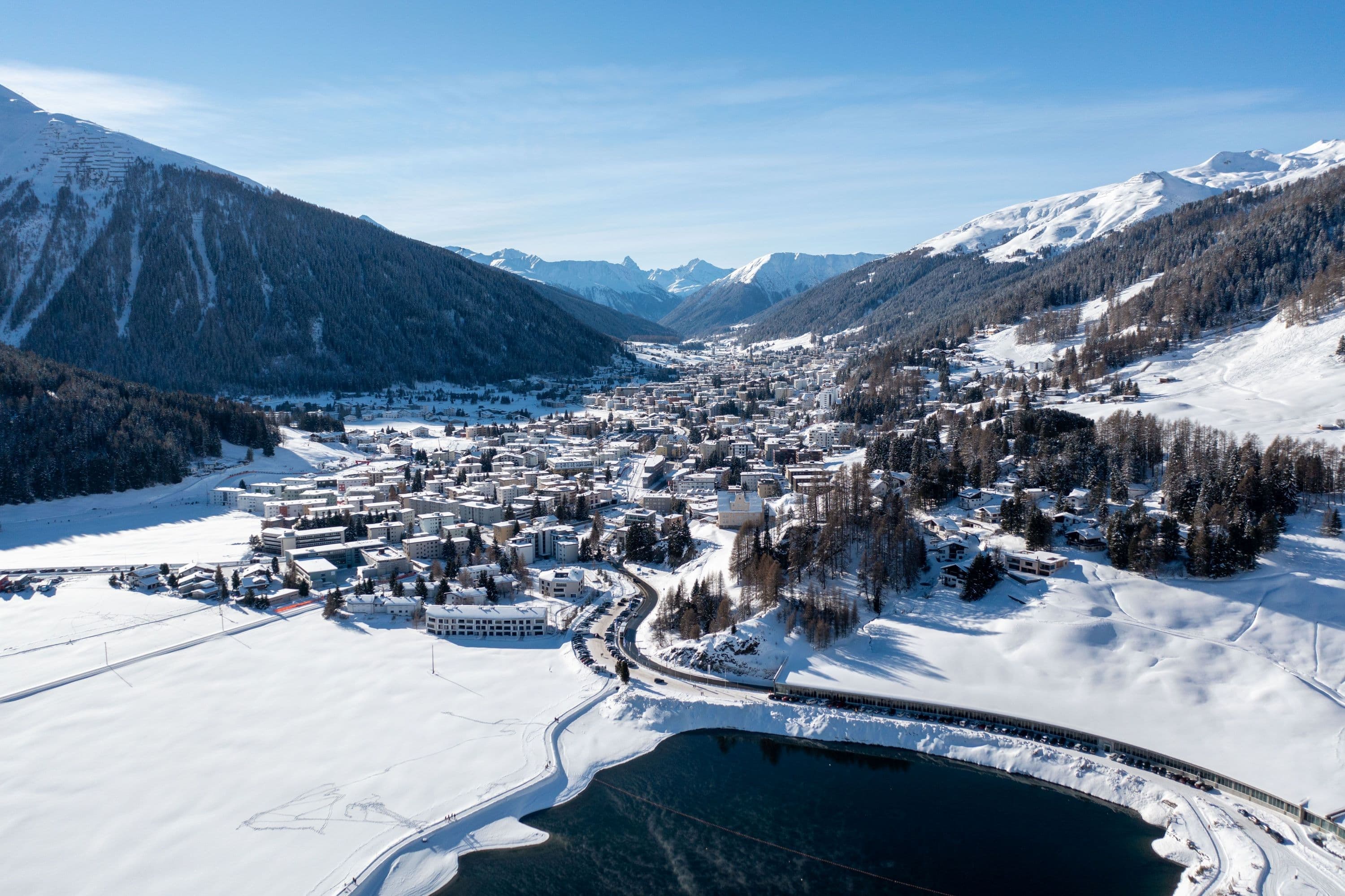
Davos is a working town rather than a resort village, which some visitors like and others do not. It offers one of the largest ski areas in the country and a long tradition of winter sports.
Klosters, a few minutes down the valley, is smaller and more village-like while sharing much of the same terrain.
Interlaken
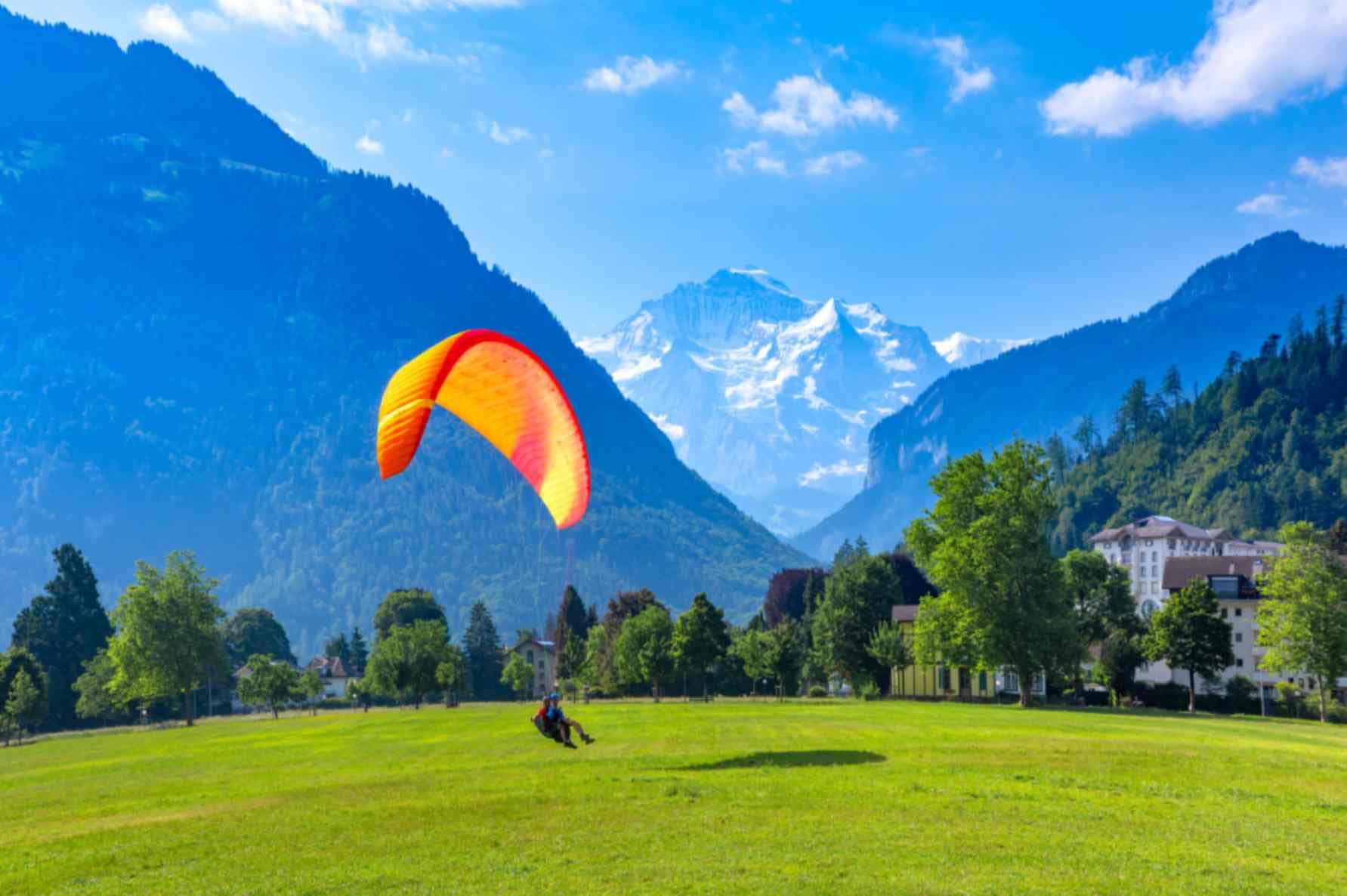
Interlaken is not a ski resort — it sits low, between two lakes — but it is an excellent base for a first winter trip that is not centred on skiing.
Trains run from here into the Jungfrau region in under an hour, so you can stay in a valley town with restaurants, shops and lake views, and go up into the mountains each day.
Beyond Skiing
Skiing and snowboarding are the obvious reason to come, and Switzerland does both extremely well. But a first winter built entirely around lift passes misses a good deal.
Winter Hiking
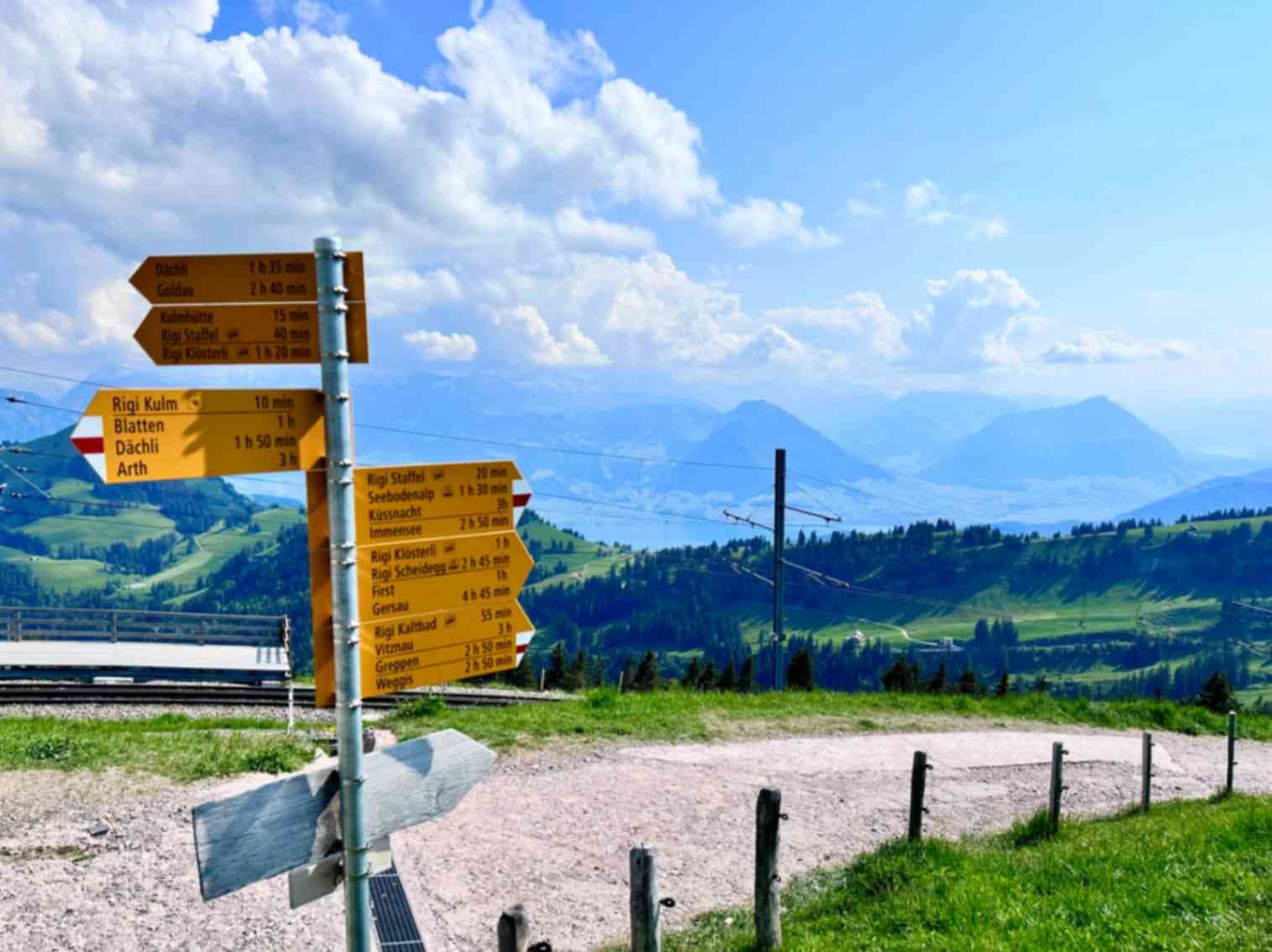
Switzerland maintains a network of prepared winter walking trails, marked with distinctive pink signposts and cleared or rolled after snowfall. They require no special equipment beyond warm boots, and many are reachable by mountain railway.
This is the single most underrated winter activity in the country.
Sledging
Sledge runs are taken seriously here. Many are several kilometres long, served by lift or railway, and floodlit into the evening on certain nights. Sledges can be hired at the top station.
It is genuinely fast, and worth treating with more respect than the word suggests.
Snowshoeing
Snowshoe trails offer access to quieter terrain without technical skill. Marked routes exist in most regions; venturing off them requires avalanche knowledge and should not be improvised.
Thermal Baths
Sitting in an outdoor thermal pool while snow falls is one of the defining Swiss winter experiences. Leukerbad, Scuol and Bad Ragaz are the best-known destinations, and most mountain regions have something similar.
It is also the ideal contingency plan for a day of poor visibility.
Scenic Rail
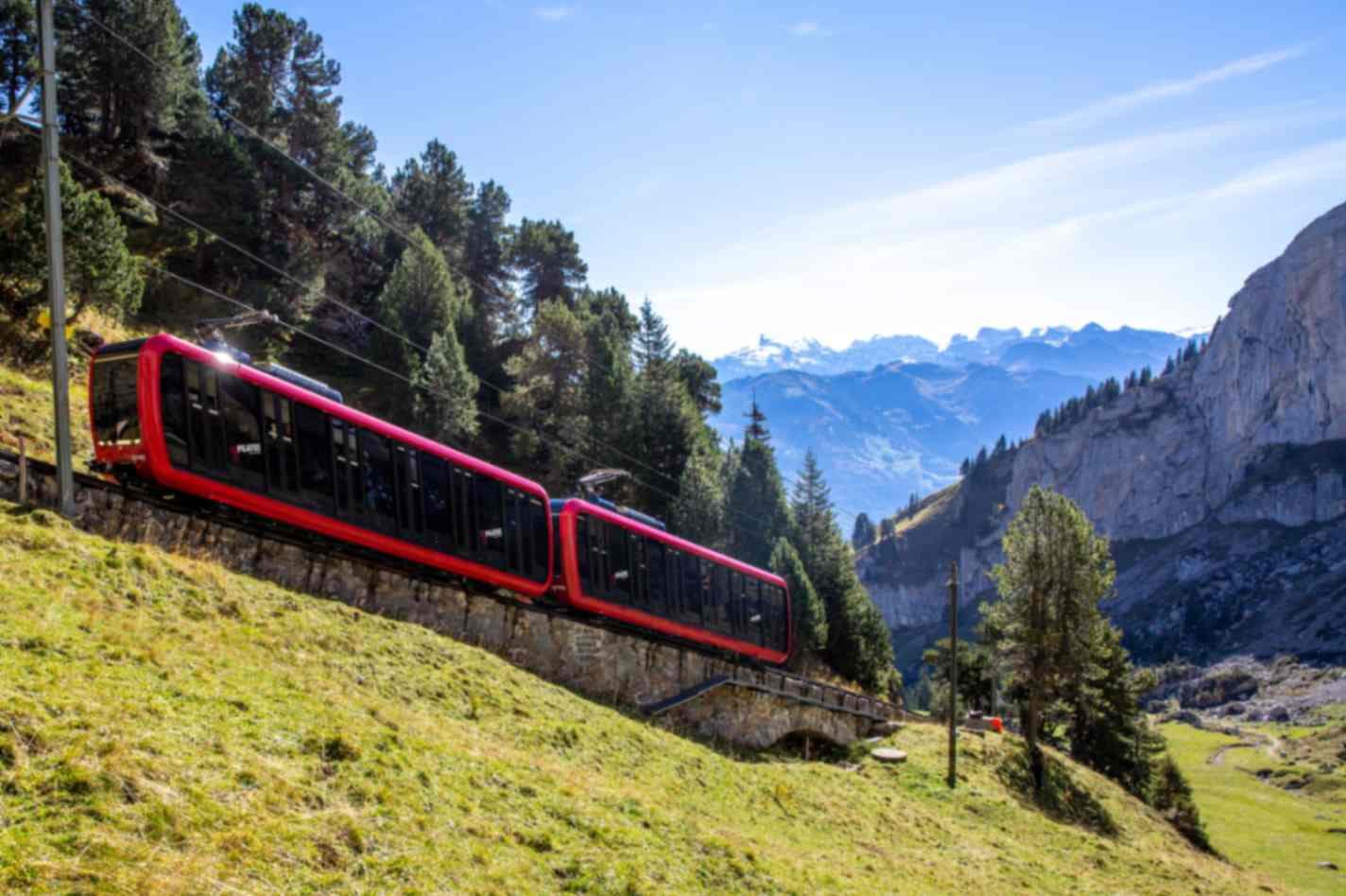
The panoramic rail routes run through the winter, and several are arguably better in snow than in summer. The Glacier Express, the Bernina Express and the GoldenPass Line all operate year-round.
Reservations are mandatory on these trains and should be made in advance.
Christmas Markets
If you travel in December, the markets in Basel, Zurich, Bern and Montreux are among the largest in the country. Mountain villages hold smaller versions that are often more atmospheric.
Getting Around in Winter
Swiss public transport runs through the winter with very little disruption, and for most first-time visitors it is a better choice than driving.
- Trains and postbuses reach almost every mountain village on a published timetable.
- Snow chains and winter tyres are a legal and practical requirement for driving on mountain roads.
- Several major resorts, including Zermatt, Wengen and Mürren, are car-free and can only be reached by rail.
- Luggage can be forwarded between stations, which removes the worst of the transfer problem.
- Mountain railways and cable cars are usually separate from the national network and priced separately.
A rail pass often makes sense, but check what it covers: national trains, buses and boats are generally included, while mountain excursions may be discounted rather than free. A ski pass is always a separate purchase.
What to Pack
Alpine winter is cold but dry, and the sun at altitude is much stronger than most visitors expect.
- Layers rather than one heavy coat — a base layer, a warm mid-layer and a windproof outer shell.
- Waterproof boots with a proper grip; village streets are frequently icy.
- Sunglasses and high-factor sun cream, which matter more in February snow than in August.
- Gloves, a hat and a neck covering, all of which are easy to underestimate.
- A small rucksack, because you will take layers off in the sun and put them back on in the shade.
- Swimwear, if there is any chance of a thermal bath.
Ski equipment is easy to hire locally and rarely worth transporting for a first trip.
Mountain Weather and Safety
Conditions change quickly and can differ sharply between the valley and the summit. A grey, overcast village morning is often sitting beneath a layer of cloud with clear sunshine above it.
- Check the avalanche bulletin daily if you intend to leave marked routes; the national scale runs from 1 to 5.
- Stay on marked and prepared trails unless you have the training and equipment not to.
- Mountain railways and lifts close in high wind, sometimes at short notice.
- Carry a charged phone, and tell someone where you are going.
- Allow more daylight than you think you need; dusk arrives early and quickly.
None of this is cause for anxiety. Swiss mountain infrastructure is exceptionally well run, and the marked network is designed to be used safely by visitors without specialist knowledge.
Mistakes First-Time Visitors Make
A few patterns come up repeatedly.
- Booking too many separate bases, and spending the holiday moving luggage.
- Assuming a rail pass covers every mountain railway.
- Underestimating how early the light goes in December and January.
- Packing for cold but not for sun.
- Building the entire trip around skiing, then losing two days to weather with no alternative plan.
- Choosing a low-altitude village in early December and finding no snow.
A Sample First Week
A straightforward itinerary for a first visit, based in one place with day trips out.
- Days 1 to 4 — Grindelwald or Wengen: skiing or winter walking, an excursion to Kleine Scheidegg, and one sledge run.
- Day 5 — a slower day in Interlaken, or a thermal bath if the weather turns.
- Days 6 to 7 — travel to Lucerne or Bern by train, with an afternoon in the old town and a Christmas market in December.
One base, one transfer, and a mixture of mountain and town. It is a more relaxed shape than most first-time plans, and almost always a better one.
Final Thoughts
A first winter in the Swiss Alps is easier to arrange than it looks. The transport is reliable, the marked trail networks are extensive and well maintained, and the country is set up for visitors who want to spend time in the mountains without being mountaineers.
The advice that matters most is also the simplest: pick one base and stay in it, plan for short days, and leave room for the things that are not skiing. The thermal bath in a snowstorm, the sledge run after dark, the train climbing slowly through the trees — those tend to be the days people describe afterwards.
Everything else can be booked when you arrive.